04/21/26
Governors Green and Lujan Grisham talk disaster management and recovery at WGA’s 2026 Policy Forum
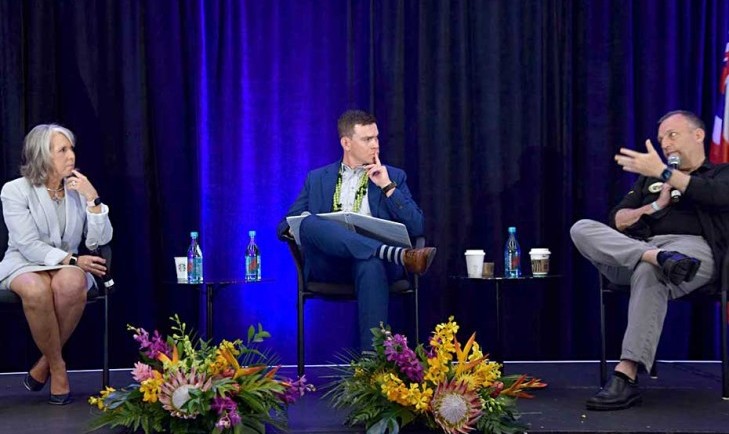
In recent years, Hawaiʻi Governor Josh Green and New Mexico Governor Michelle Lujan Grisham have been at the forefront of response and recovery efforts following some of the region’s most significant disasters.
WGA's 2026 Policy Forum featured Governors Green and Lujan Grisham in a discussion about the lessons that they've learned from those experiences, as well as strategies that they think can help communities better prepare for, respond to, and recover from future disasters.
The two-day workshop also convened disaster response experts from around the country for panels about lessons from the Lahaina wildfire, rebuilding after disasters, trauma-informed approaches to disaster recovery, the future of disaster management and recovery, and disaster recovery in rural communities.
"I know that you've heard many of the stories," Governor Green said, "but we wanted to bring people with expertise to share what our experience was so that you can take best practices away or areas where we can improve. That's what we were about."
"I want to give Hawaiʻi and Governor Green a shoutout," Governor Lujan Grisham said. "I thought it was really effective the way in which you're leveraging both private dollars and state dollars so that you just built a community (for wildfire survivors)... I'm going to steal that model, which is exactly why I'm here."
To watch the Governors’ Conversation or any of the forum's panels, click the session titles below or visit WGA's YouTube Page.
You can also watch the highlight video below for a quick recap.
- The Honorable Josh Green, Governor of Hawaiʻi
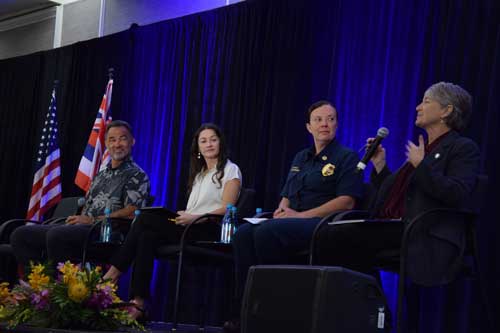 Lessons from the Lahaina Wildfire
The Lahaina wildfire was extraordinarily destructive as a result of numerous compounding factors. Wildfire risk, created by environmental conditions like extreme fire weather and dry fuels, was amplified by human factors, including communications, incident command systems, and more. To ensure that this tragic event does not repeat itself, analysis, accountability, and policy reform are imperative. This panel focused on the findings of post-fire analyses to understand how a systems-thinking approach can improve fire preparedness, response, and recovery.
- Panelists: Anne Lopez, Attorney General, State of Hawaiʻi; Derek Alkonis, Senior Research Program Manager, Fire Safety Research Institute; Elizabeth Pickett, Co-Executive Director, Hawaiʻi Wildfire Management Organization; and Dori Booth, State Fire Marshal, State of Hawaiʻi
The Maui wildfires caused widespread destruction and displacement, particularly in Lahaina. This session examined how federal, state, and local governments responded to urgent temporary housing needs in the immediate aftermath of the fires, as well as efforts to rebuild the Lahaina community and provide more permanent housing solutions.
- Panelists: Joseph Campos, Deputy Director, Hawaiʻi Department of Human Services; Roseann Freitas, Chief Executive Officer, Building Industry Association of Hawaiʻi; Josiah Nishita, Managing Director, County of Maui; and Natalie Grant, Director, Office of Human Services Emergency Preparedness and Response, Administration for Children and Families, U.S. Department of Health and Human Services
Trauma-Informed Approaches to Disaster Recovery
This session examined trauma-informed approaches to disaster recovery, with a focus on lessons and ongoing needs following the 2023 Maui wildfires. Speakers discussed how recovery programs, public services, and community engagement efforts can be structured to account for the behavioral, social, and cultural effects of large-scale disasters. The session highlighted practical considerations for agencies and partners working with affected communities, including approaches that support effective disaster assistance delivery and improve recovery outcomes.
- Panelists: Tia Hartsock, Director, Hawaiʻi Office of Wellness and Resilience; Tison Thomas, Acting Director, Center for Mental Health Services, Substance Abuse and Mental Health Services Administration, U.S. Department of Health and Human Services; Carolyn Ingram, SVP, Policy and Government Affairs and New Mexico Board Chair, Molina Healthcare; Alika Maunakea, Professor, John A. Burns School of Medicine, University of Hawaiʻi, Manoa; and Michele Navarro Ishiki, Founder and Executive Director, Piha Wellness and Healing
- The Honorable Josh Green, Governor of Hawaiʻi
- The Honorable Michelle Lujan Grisham Governor of New Mexico
- Jack Waldorf, WGA Executive Director.
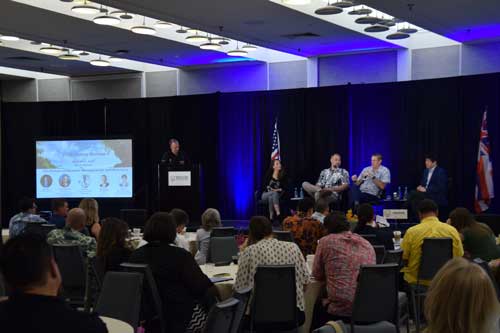 The Future of Disaster Management and Recovery
Federal support is essential to help coordinate and provide support before, during, and after natural disasters, but many disaster management and recovery policies and programs can be improved to be more efficient and responsive to state, local, and community needs. This session examined emerging approaches that enhance interagency coordination and improve the speed and effectiveness of disaster response and recovery.
- Panelists: The Honorable Josh Green, Governor of Hawaiʻi; Carolina Van Horn, Deputy Director, Colorado Governor's Office of Climate Preparedness and Disaster Recovery; John Smith, Recovery Administrator, County of Maui; Daniel Craig, Chief Executive Officer, Tidal Basin Group; and Kil Huh, Senior Vice President, Government Performance, The Pew Charitable Trusts
Disaster Recovery in Rural Communities
After disaster strikes, communities are faced with the difficult process of recovery. In rural areas, these efforts can be complicated by the geographic isolation and potential capacity constraints of communities. This session examined how disaster-affected areas can meet these challenges and reestablish their economic vitality.
- Panelists: Linda Liu, Partner, McKinsey & Company; Dennis Kwak, District Director, U.S. Small Business Administration; Kekoa McClellan, Principal, The McClellan Group; and Ali Rye, State Director, New Mexico Department of Homeland Security and Emergency Management
- The Honorable Josh Green, Governor of Hawaiʻi