01/22/26
Best of the West: World’s largest wildlife crossings; Utah Literacy Symposium; Green jet fuel; Idaho LAUNCH; and a first-in-century fossil find
.png)
The Western Governors' Association keeps you updated on the latest news in the West. Here are the top stories for the week starting January 19, 2026. (Photos courtesy of the Adobe Stock Images, the Office of Colorado Governor Jared Polis, the Office of California Governor Gavin Newsom, the Office of Utah Governor Spencer Cox, and the National Park Service).
Across the West, highways and other critical infrastructure carve up important migration routes for all types of wildlife. As a result, as many as 2 million motorist-wildlife crashes occur every year across the country.
To improve safety for drivers and help connect migrating animals to necessary habitats, western states are prioritizing robust wildlife crossing legislation. Since 2020, at least 8 western states – California, Colorado, Montana, New Mexico, Nevada, Oregon, Utah, and Wyoming – have enacted specific wildlife crossing legislation.
States like Montana – which has the second-highest rate of wildlife-vehicle collisions – have developed dedicated funding mechanisms for wildlife crossing infrastructure through tax funds from cannabis sales and revenue from specialty license plates.
Federal support also came from the Infrastructure.jpeg) Investment and Jobs Act, which has helped fund some of the largest wildlife crossings in the world.
Investment and Jobs Act, which has helped fund some of the largest wildlife crossings in the world.
One such project is in Colorado, where the state wrapped up construction on the Greenland wildlife overpass last month. The 41,800 square-foot bridge is one of the largest wildlife crossings in the world, and it spans six lanes of busy Interstate 25 traffic to connect moose, bear, mountain lion, elk, mule deer, and pronghorn to 39,000 acres of habitat. This stretch of highway between Denver and Colorado Springs handles more than 100,000 cars daily and sees an average of one wildlife collision every day. Experts estimate that the overpass will reduce collisions by 90 percent.
Another project that will land among the world’s largest wildlife crossings is the Wallis Annenberg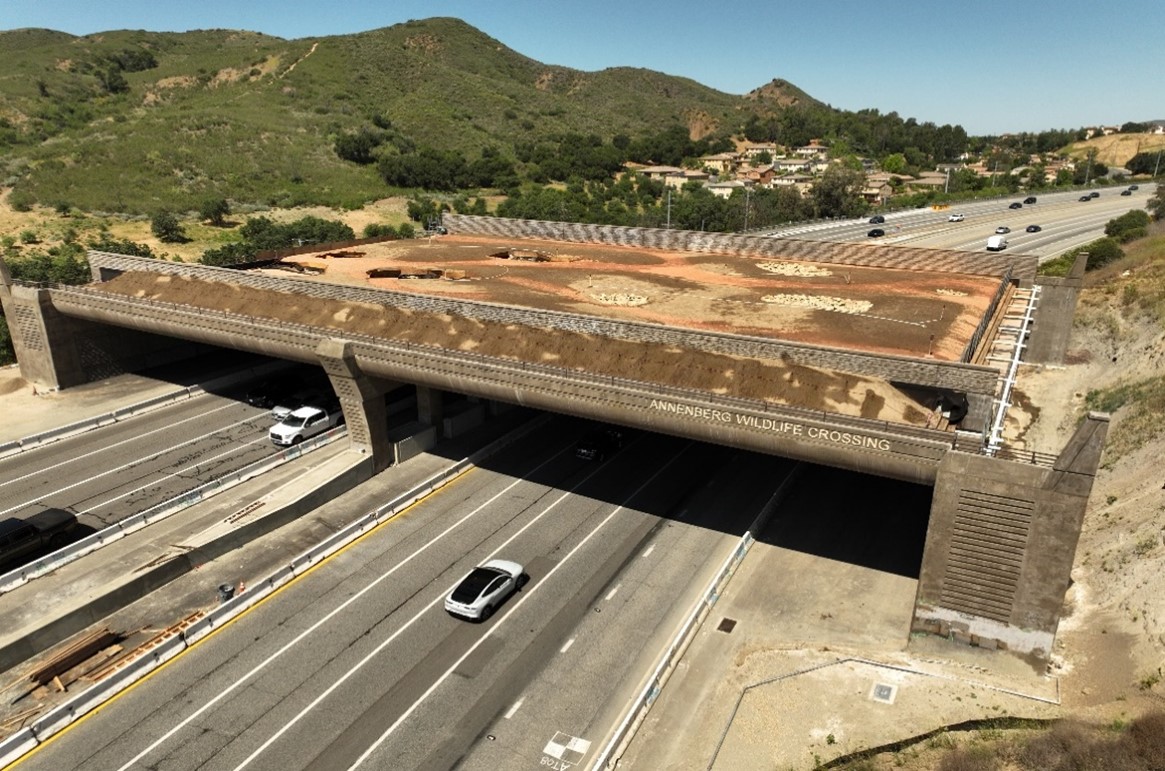 Crossing, which is nearing completion in California. The overpass will cross 10 lanes of Highway 101 north of Los Angeles, which sees more than 300,000 vehicles every day. The bridge will be particularly important for mountain lions, which have been cut off from large sections of their habitat that are essential for finding mates and hunting for food.
Utah built the first wildlife overpass in the country in 1975, and the state has completed dozens of infrastructure projects to help wildlife and fish move safely since. In 2025 alone, the Utah Division of Wildlife Resources and the Utah Department of Transportation completed a dozen projects, ranging from new bridges to connect trout with spawning grounds to equipping mule deer with GPS collars to better understand their migration routes across roadways.
At the federal level, bipartisan legislation led by Ryan Zinke of Montana and Don Beyer of Virginia aims to permanently authorize the Wildlife Road Crossings Program to maintain funding for these projects, as the current federal funding stream expires this year.
For more on Western Governors’ perspective on the issue, read WGA Policy Resolution 2024-03, Species Conservation and the Endangered Species Act. Specifically, the resolution urges “Congress to include long-term funding and provisions in its next reauthorization of federal surface transportation programs for state-supported transportation infrastructure projects that support fish and wildlife crossings and habitat connectivity.”
Utah Literacy Symposium: earlier this month, Utah Governor Spencer Cox and First Lady Abby Cox convened state and national leaders for a Literacy and Reading Symposium to strengthen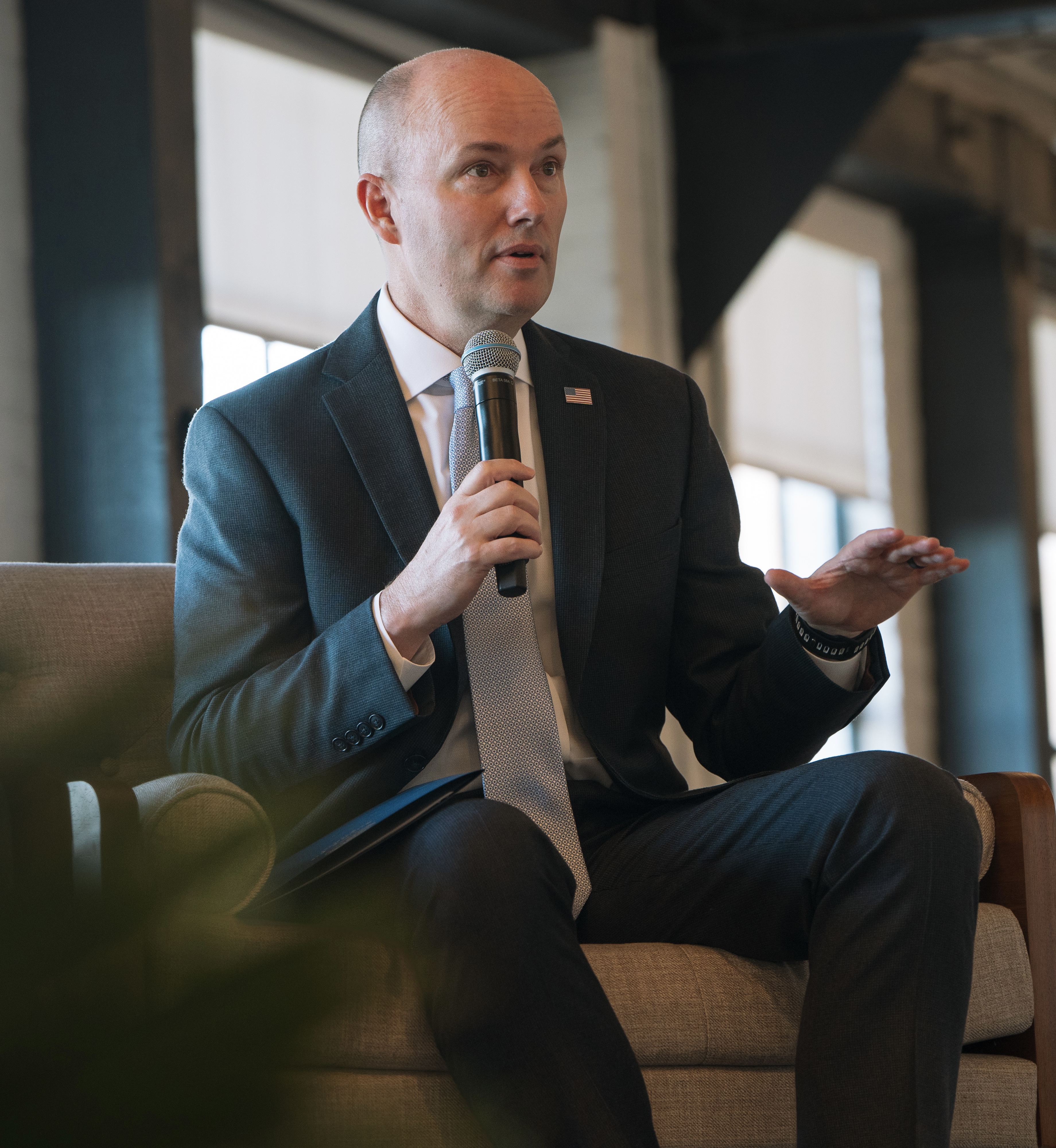 literacy and get more Utah kids reading. The symposium brought together local educators and community leaders, as well as Assistant Secretary for Elementary and Secondary Education at the U.S. Department of Education, Kirsten Baesler, and New York Times journalist and author Carlos Lozada.
“Literacy is foundational to opportunity, independence, and a functioning society,” Governor Cox said. “We can’t be satisfied with comparisons that set the bar too low. Our kids deserve high expectations and the support to meet them. This legislative session, we’re choosing literacy, and we’re choosing our children.”
In his FY27 budget recommendations, Governor Cox is calling for $80 million to fund paraeducator initiatives and $500,000 for a literacy campaign.
Green jet fuel: in Washington earlier this month, Governor Bob Ferguson was on hand for the launch of a new sustainable aviation fuel research center in Snohomish County. It will be paired with the Cascadia Sustainable Aviation Accelerator, a nonprofit that will run in conjunction with the county and Washington State University to help make Washington a hub for developing sustainable aviation fuel.
The accelerator will be supported by $10 million from the state legislature and an additional $10 million from an unidentified donor. Sustainable aviation fuel can cut the carbon footprint of air travel by 50 to 80 percent.
Idaho LAUNCH: new research shows that the Idaho LAUNCH initiative is effectively increasing post-high school education and training among Idaho students and keeping more graduates in-state to pursue education and careers.
Governor Brad Little kickstarted the program in 2023 to help students access degrees and career training that align with Idaho’s workforce needs. The new findings show that after LAUNCH, in-state enrollment in postsecondary education has increased by 11 percent.
Prior to LAUNCH, Idaho trailed other states in retaining graduates for post-secondary education. Since the program has been in place, that trend has flipped as Idaho now leads many states in the share of students who stay in-state for further education.
Dinosaur National Monument discovery: one of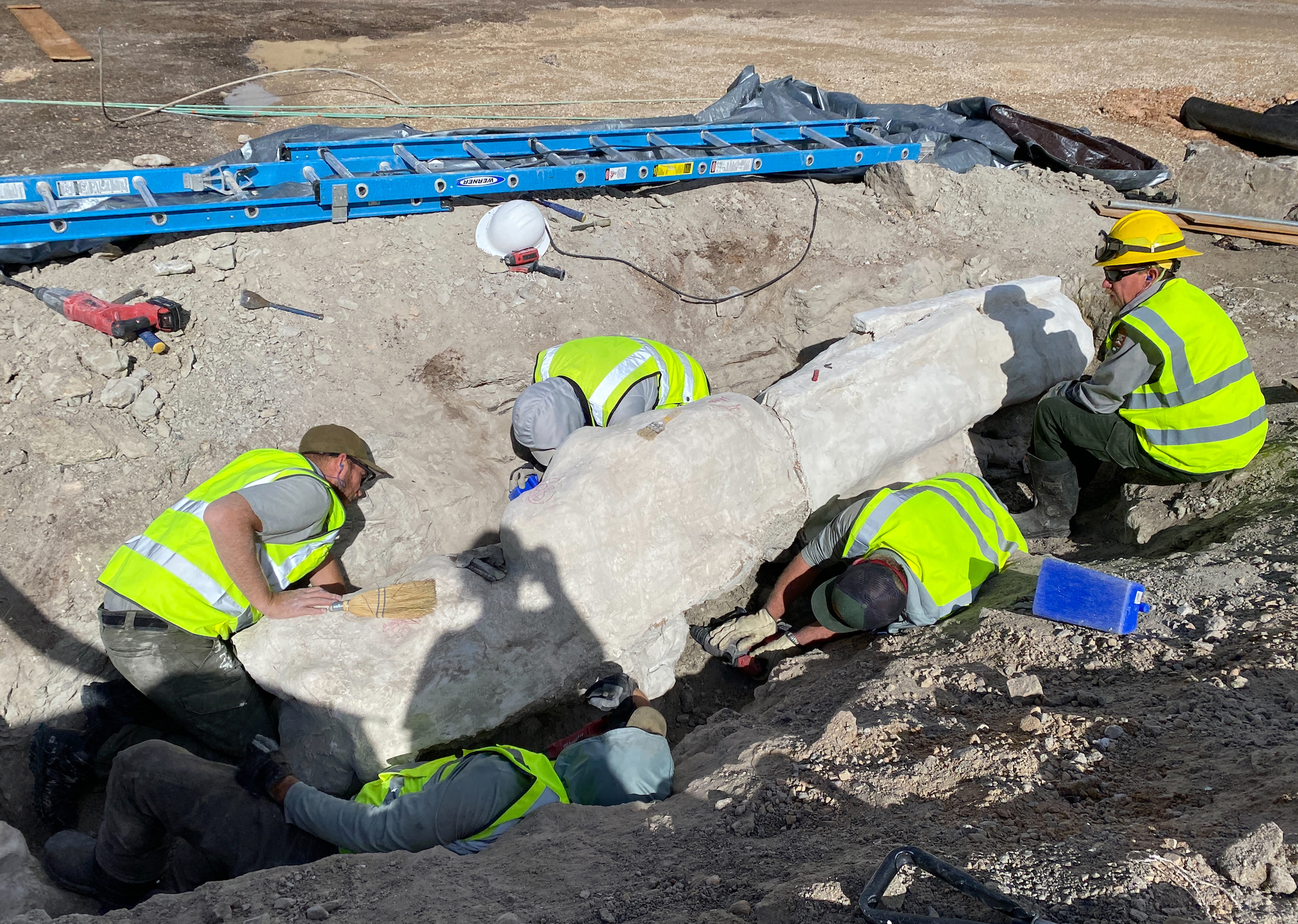 the West’s most-studied fossil sites just turned up its first new fossils in over a century. Dinosaur National Monument, which spans parts of Utah and Colorado, is home to thousands of prehistoric fossils dating back hundreds of millions of years.
In September, construction work at the park revealed previously uncovered fossils, marking the first discovery at the site since 1924. Paleontologists believe that the fossils belong to a large, long-necked dinosaur, most likely a Diplodocus.